
Showing all 6 results
How pestil is made
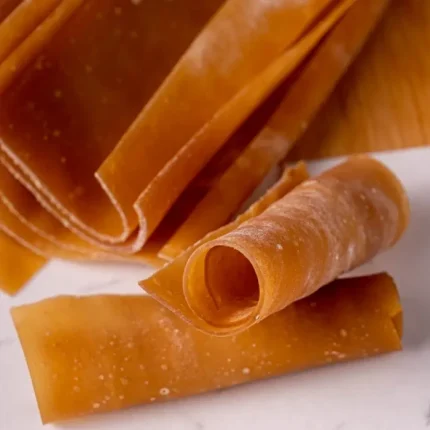
Fruit juice or pulp is concentrated, often thickened according to the regional recipe, spread in a thin layer and dried until flexible. The result is similar to fruit leather but belongs to a much older Anatolian preservation tradition.
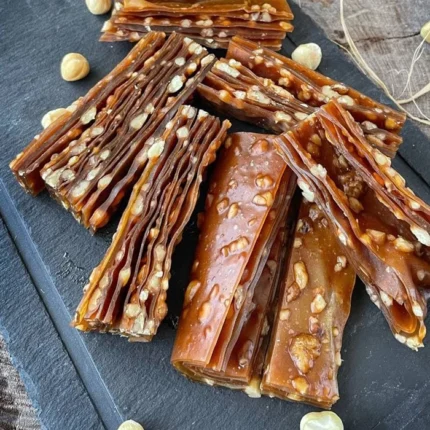
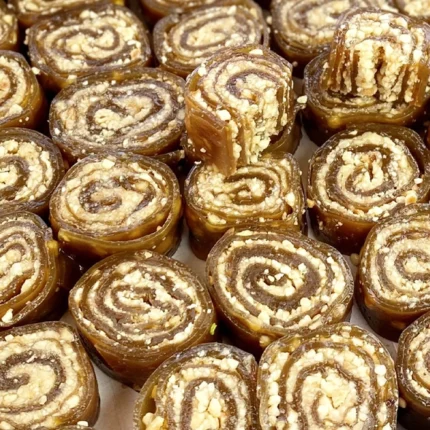
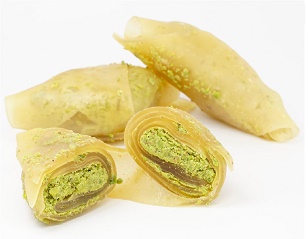
Plain pestil and nut-filled versions
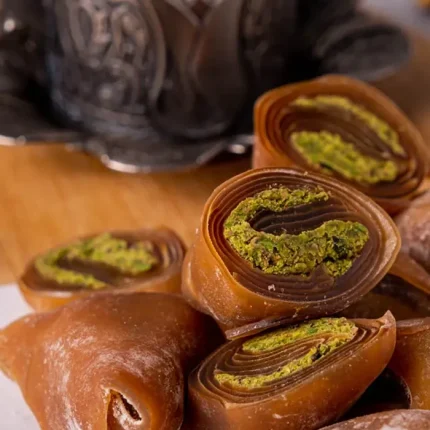
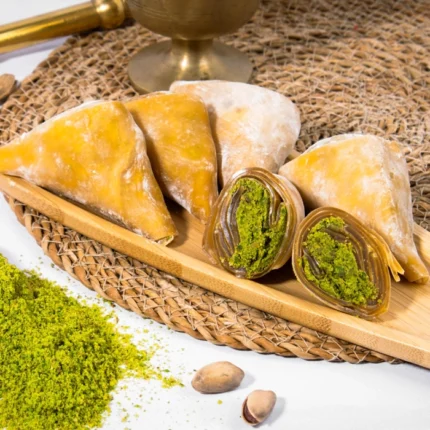
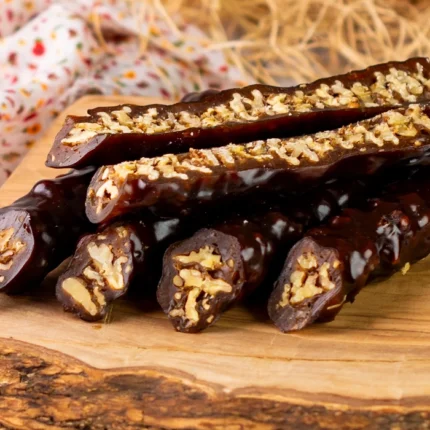
Plain sheets highlight the fruit, while walnut, hazelnut or pistachio fillings add crunch and richness. Muska-style pieces are folded into triangular shapes and can contain nut fillings.
Fruit-only sheets are thin and flexible, while nut-filled versions can be much thicker and more substantial. If you want pestil for snacking, both work; if you plan to cut it into small serving pieces, the filled style is closer to confectionery.
Regional tradition
Pestil is made in several parts of Türkiye, with Gümüşhane and Tunceli among regions known for dried fruit-pulp and nut sweets. Recipes vary by local fruit.
What to check online
Compare the fruit base, added sugar or molasses, nuts, flour or starch if used, piece format, allergens and pack weight. For a related nut, dried-fruit or snack category, explore Dried Fruits and Snacks, Crisps and Croquants.
Frequently asked questions
What is pestil?
Pestil is a traditional dried fruit-pulp sheet, often made from grape or mulberry and dried until flexible.
Is pestil the same as fruit leather?
It is similar in form, but pestil has its own Turkish regional recipes and may include thickeners, molasses or nuts.
What is muska pestil?
Muska usually refers to folded triangular pestil pieces, often filled with nuts or a nut-based mixture.
Does pestil contain nuts?
Plain pestil may not, but many filled or rolled styles do, so check allergens.
 Salt & Cooking Essentials