
Showing the single result
Turkish Copper Pans
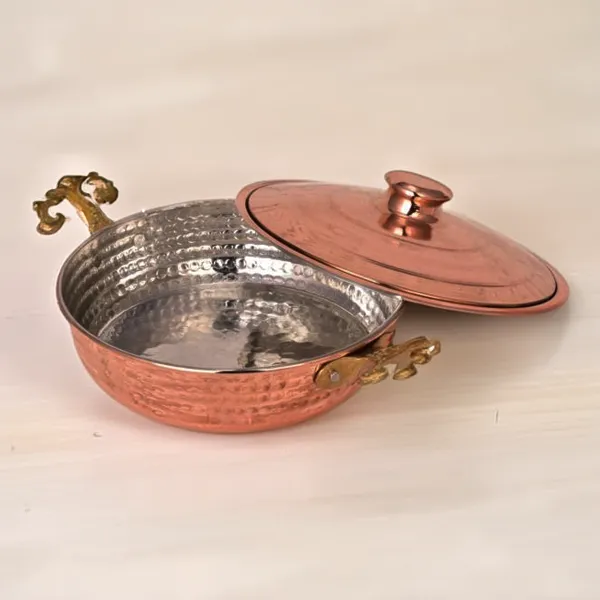
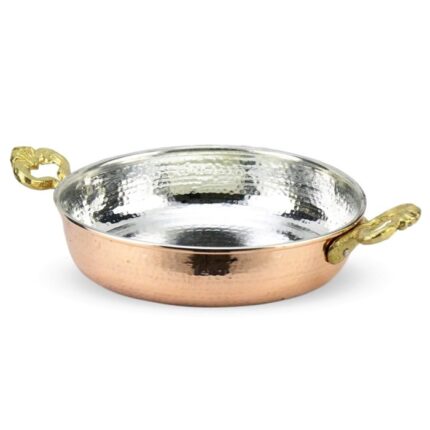
Turkish copper pans are valued for fast, responsive heat transfer and a traditional handcrafted appearance. A small shallow pan can be especially useful for eggs, butter-based dishes, sauces or table-to-stove presentation, but cooking performance depends on more than the copper exterior. The food-contact lining, pan thickness, handle construction and heat-source compatibility are essential.
Why lining matters in copper cookware
Unlined copper can react with acidic foods, so food-use copper pans are commonly lined with tin or stainless steel. Check the lining before use and stop cooking in a pan if a worn interior exposes large areas of bare copper.
Choose diameter and depth by cooking style
A small shallow pan heats quickly and is useful for individual portions, while deeper or wider cookware changes both capacity and evaporation. Compare the measured diameter and depth rather than relying on generic size words.
Handles and heat sources
Copper itself is generally not induction compatible unless the pan has a magnetic base. Metal handles can also become hot, so use appropriate protection and follow the stove and oven guidance for the specific piece.
Compare related cookware
For heavier heat-retaining cookware, see Turkish Cast Pots & Pans. For jugs, bowls, trays and other copper forms, return to Turkish Copper Kitchenware.
Frequently asked questions
Why are copper pans lined?
A suitable lining separates food from reactive copper, especially important with acidic foods.
Can a Turkish copper pan be used on induction?
Only if it has an induction-compatible magnetic base. Copper alone is not normally induction compatible.
What foods suit a small copper pan?
Small shallow pans can suit eggs, sauces and individual portions, depending on the lining and manufacturer’s intended use.
When should a copper pan be re-lined?
If a tin or other lining is badly worn and bare copper is exposed, consult a qualified re-tinning or cookware specialist before continued food use.
 Salt & Cooking Essentials