
Showing all 17 results
Turkish Copper Kitchenware
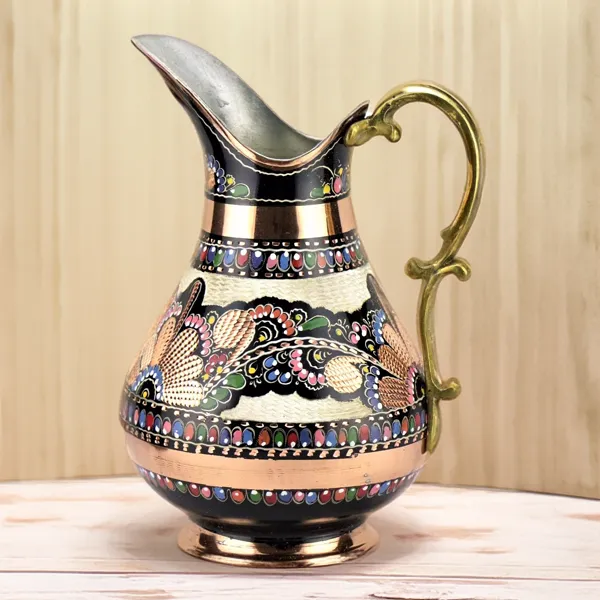
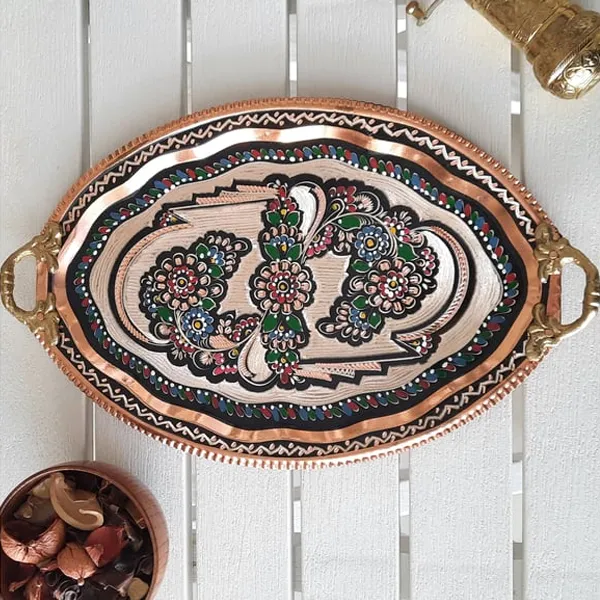
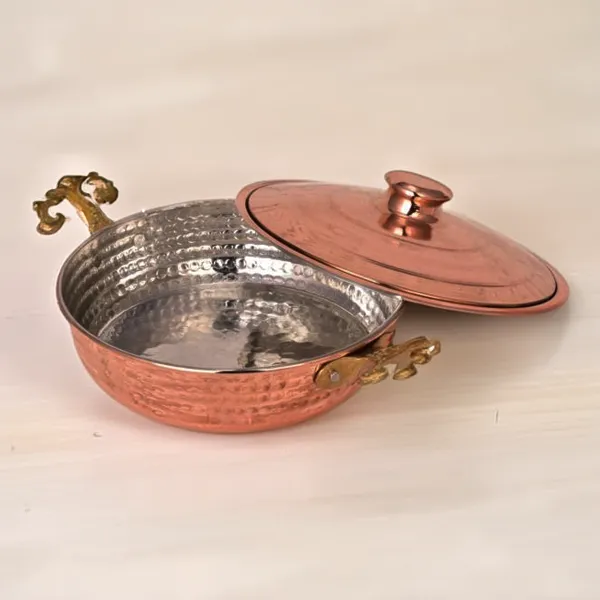
Turkish copper kitchenware includes working cookware, drink and water vessels, bowls, trays and decorative serving forms. Copper is valued for rapid heat transfer and for the hammered, engraved or polished surfaces used in traditional metalwork, but not every copper object is intended for direct cooking. The key distinction is between food-contact cookware, serving ware and decorative pieces.
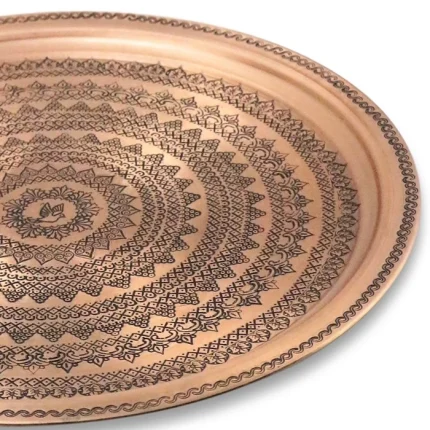
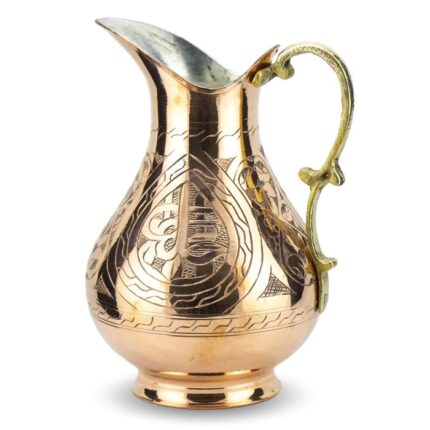
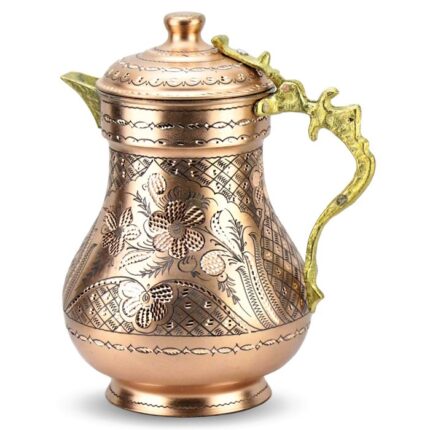
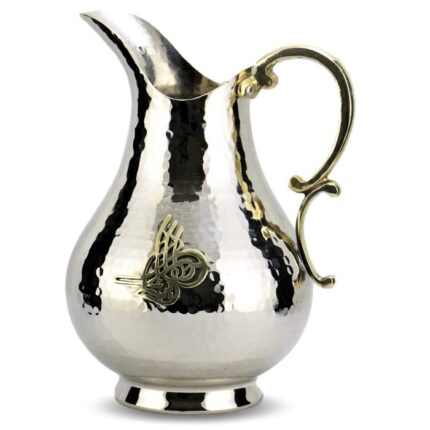
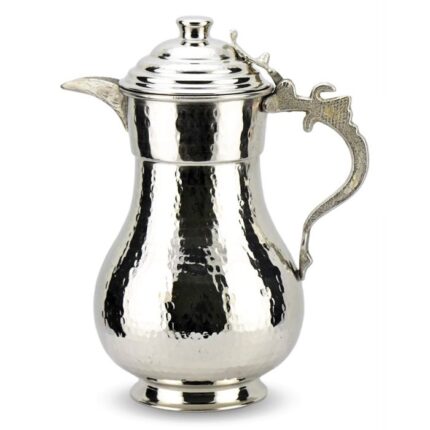
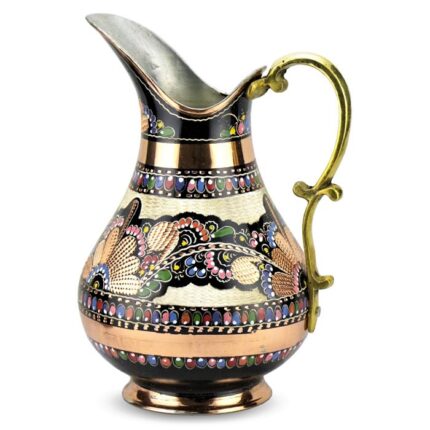
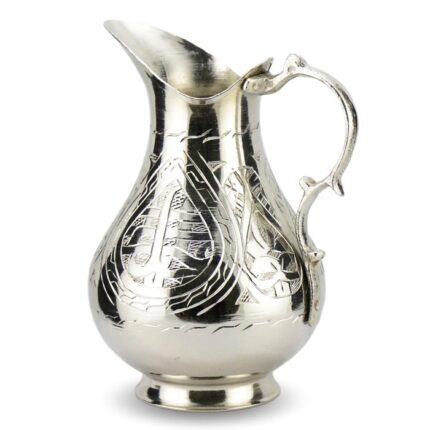
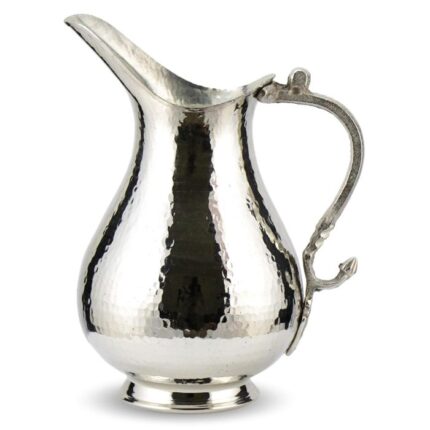
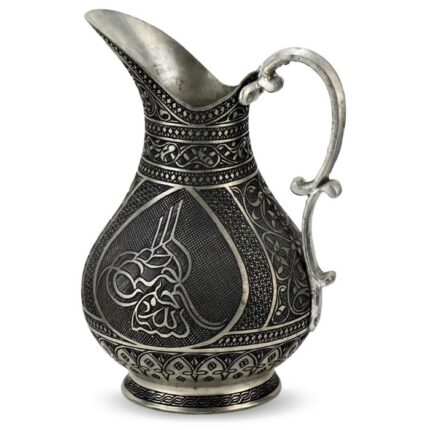
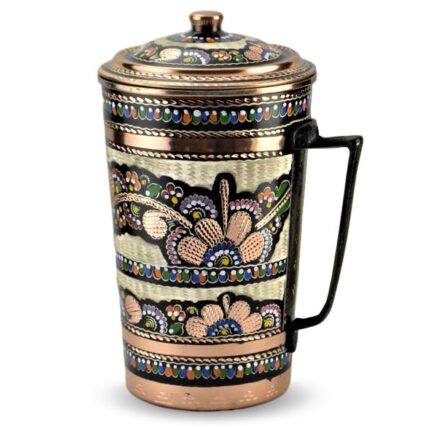
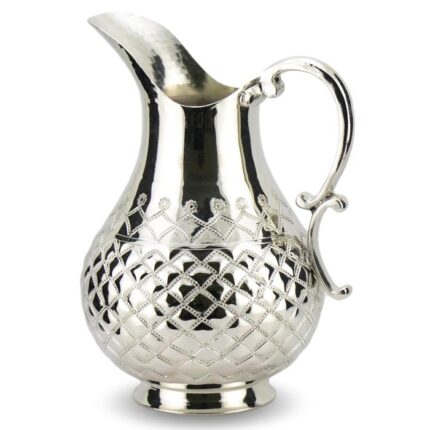
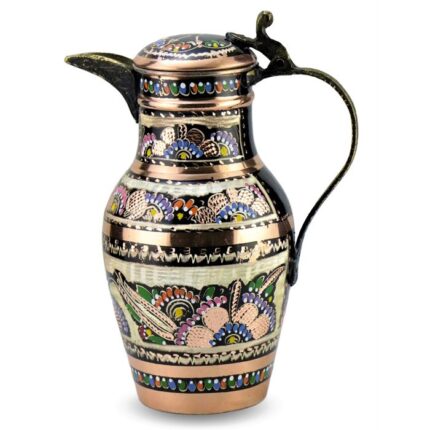
Cooking pieces need suitable food-contact surfaces
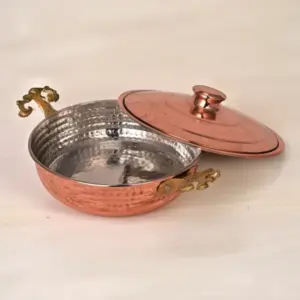
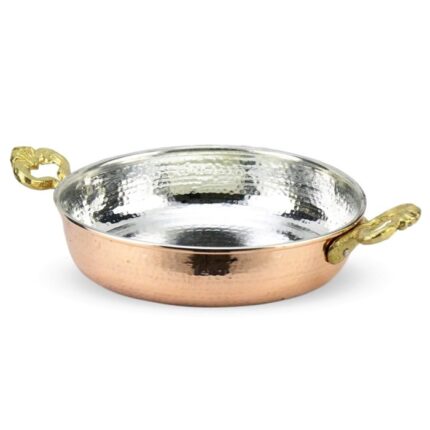
For direct cooking, browse Turkish Copper Pans and verify the interior lining. U.S. food-safety guidance warns against unlined copper in contact with acidic food because copper can leach into the food. Lined copper—commonly tin or stainless steel—has different care requirements and should be inspected for wear.
Jugs, bowls and ewers
Turkish Copper Jugs, Turkish Copper Bowls and Turkish Copper Ewers may be used for serving, display or, where specifically stated, food and beverage contact. Do not assume decorative antique-style pieces are automatically suitable for drinking water or food.
Trays and tea service
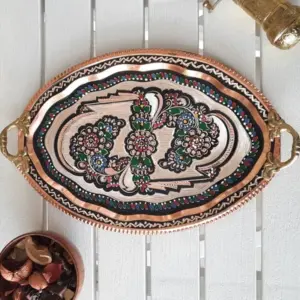
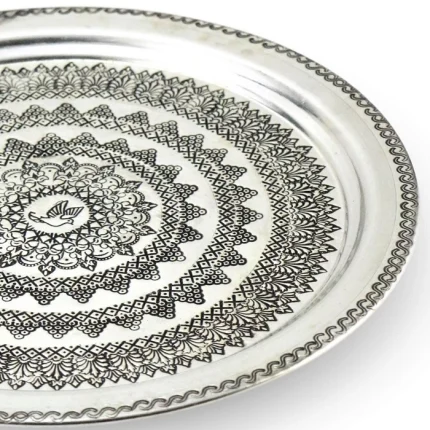
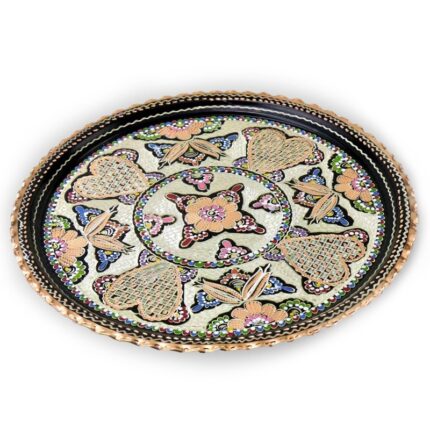
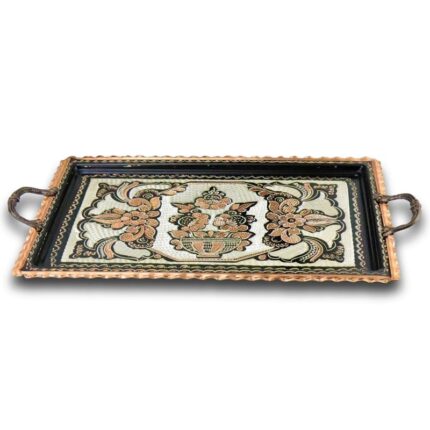
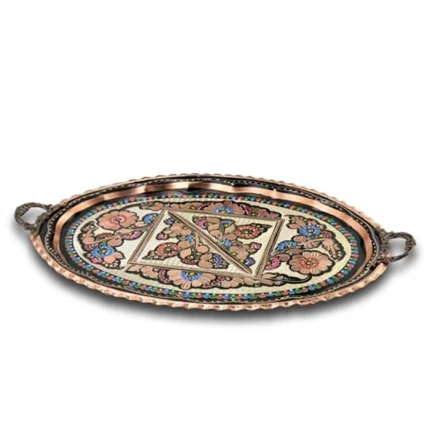
Copper Tea Trays are primarily presentation pieces and can tie copper craftsmanship into Turkish tea or coffee service without placing copper directly in contact with food. Dimensions, edge height, handle design and finish are the practical details to compare.
Copper care and patina
Copper naturally oxidizes and darkens. Polishing restores shine but can alter antique or intentionally aged finishes. Clean food-contact linings gently and avoid abrasive methods that damage tin or other interior surfaces.
Frequently asked questions
Is all Turkish copper kitchenware safe for cooking?
No. Some pieces are intended for serving or decoration. For cooking, verify the food-contact lining and intended use.
Why is copper cookware often lined?
A suitable lining separates food from reactive copper and makes the vessel more appropriate for cooking, especially with acidic foods.
What is copper patina?
Patina is the natural surface change and darkening that develops as copper reacts with air and handling over time.
Should antique-style copper pieces be used for food?
Only if they are specifically identified as food-safe and the food-contact surface is in suitable condition.
 Salt & Cooking Essentials