
Showing all 8 results
Turkish Ceramic Arts & Çini
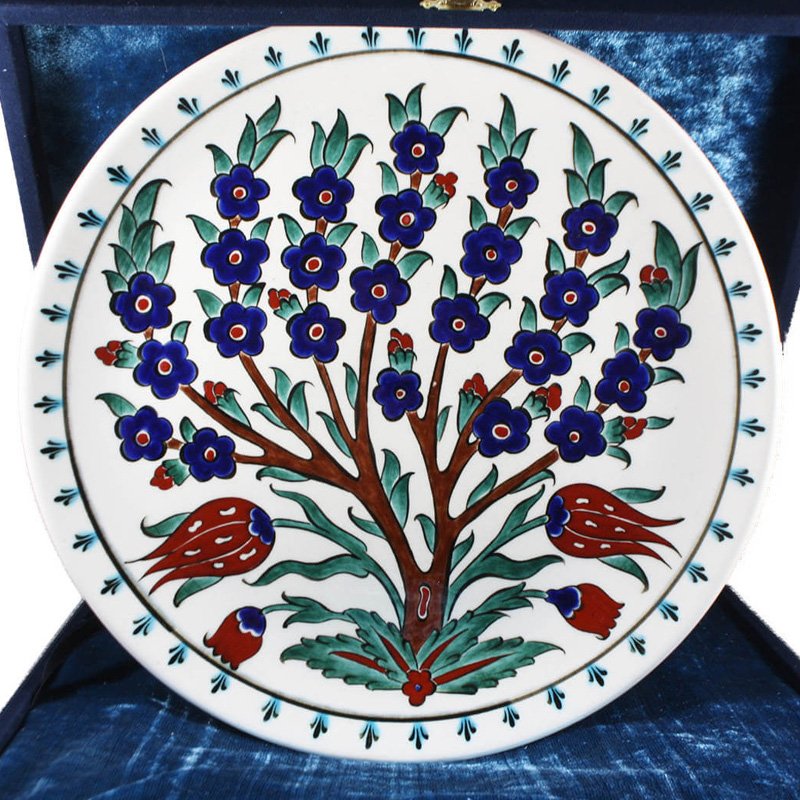
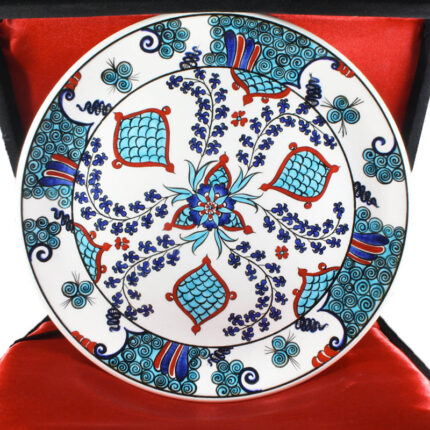
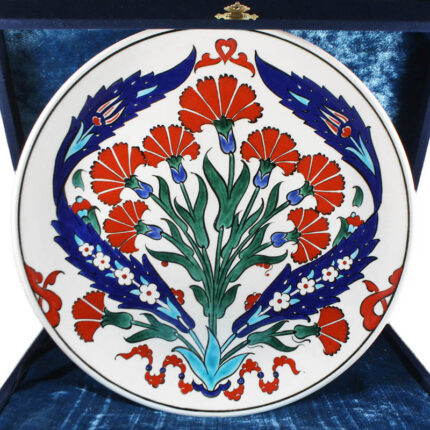
Turkish ceramic arts include a wide visual tradition of glazed pottery and çini, from architectural tiles to decorative plates. İznik and Kütahya are among the best-known centres associated with this craft vocabulary, but “Turkish ceramic” is broader than a single regional style. When buying a contemporary piece, look at the actual material, glaze, decoration method, dimensions and hanging or display requirements rather than assuming every object follows the same historical technique.
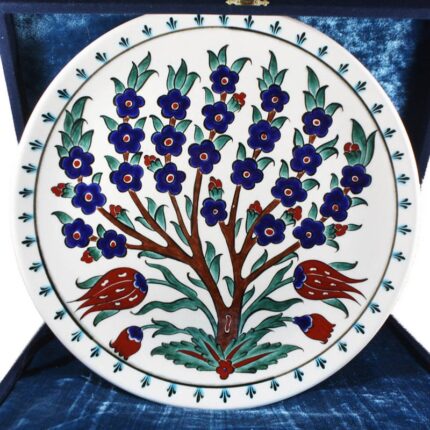
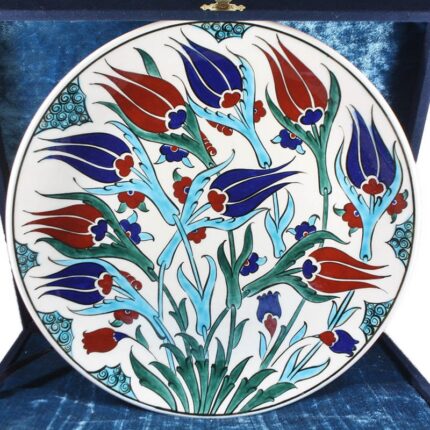
Çini as a living Turkish craft
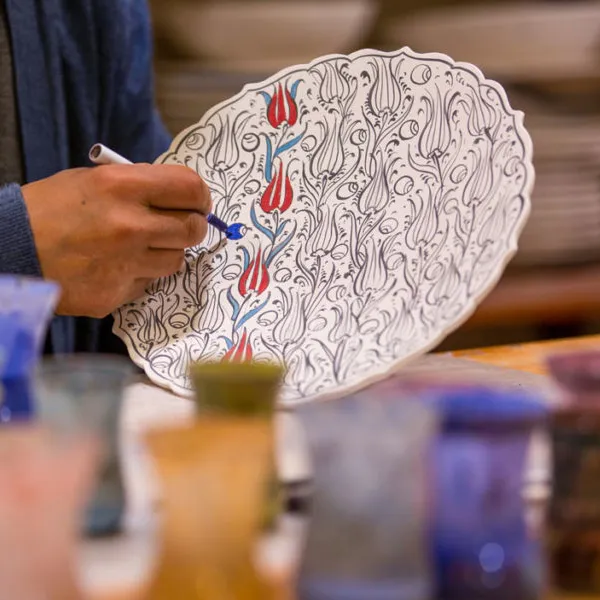
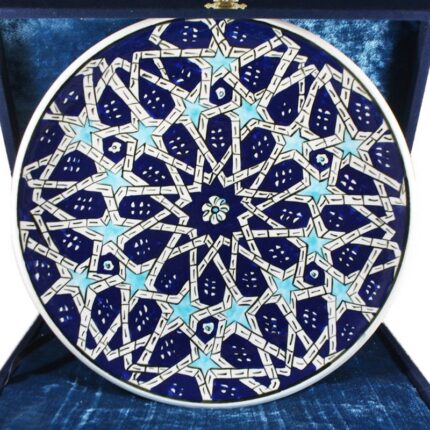
Traditional çini craftsmanship was inscribed by UNESCO in 2016 as intangible cultural heritage. UNESCO describes a multi-stage handmade process in which clay is shaped, lined, dried and fired, motifs are transferred and outlined, colours are applied, and the surface is glazed and fired again. Plant, animal and geometric motifs all appear within the tradition.
İznik visual language and decorative plates
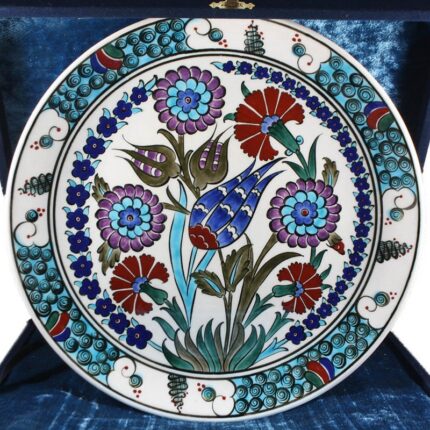
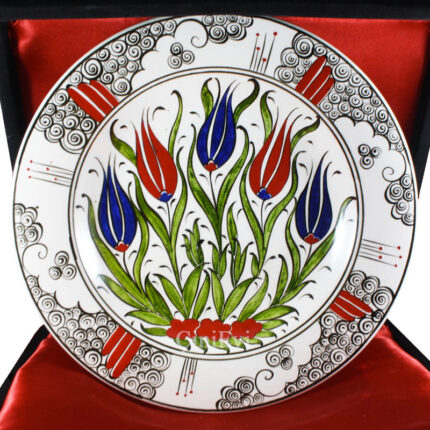
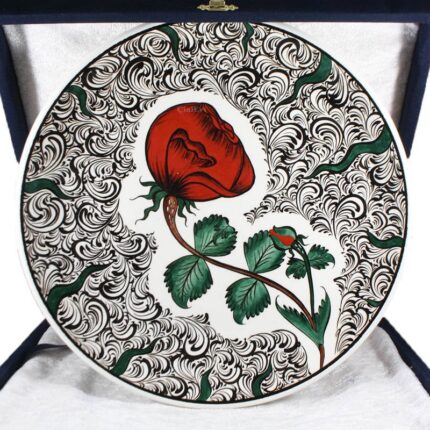
For plate-shaped pieces, explore Turkish İznik Ceramic Plates. Historical İznik ceramics are especially associated with cobalt blue, turquoise, green, black outlining and the famous tomato-red palette that developed in the sixteenth century, together with stylised tulips, roses, carnations, hyacinths and other Ottoman floral forms.
Decorative use and care
Check whether a ceramic plate is intended only for display or is explicitly food-safe. Wall pieces need a suitable hanger or stand, and hand-painted or metallic details can affect dishwasher and microwave suitability. If the product page does not state food-contact use, treat the object as decorative.
Explore related Turkish decorative arts
Return to Turkish Antique Crafts & Handicrafts for copper, wood, lighting and mixed craft categories. For decorative light built around coloured glass rather than glazed ceramic, compare Turkish Mosaic Lamps.
Frequently asked questions
What is Turkish çini?
Çini is a Turkish tradition of glazed tiles and ceramics decorated with colourful motifs. Traditional production involves shaping, firing, design transfer, painting, glazing and a further firing.
What colours are associated with İznik ceramics?
Historic İznik work is known for cobalt blue, turquoise, green, black outlines and a distinctive red developed in the sixteenth century.
Are all Turkish ceramic plates food-safe?
No. Some are decorative display pieces. Use a ceramic for food only when the product information explicitly confirms food-contact suitability.
Are Turkish ceramics always handmade?
Traditional çini is a handmade craft, but modern retail ceramics can use different production methods. Check the product description for the specific item.
 Salt & Cooking Essentials